
What is Vitamin D?
Vitamin D is best known for its role in maintaining bone health, but its effects extend well beyond the skeleton. Its active form, calcitriol, binds to vitamin D receptors found in many tissues throughout the body, helping to regulate processes including muscle metabolism and function, immune function and bone metabolism.
For anyone training hard, particularly athletes, vitamin D status is worth paying attention to.
Vitamin D is often called "the sunshine vitamin" as the skin makes it in response to UVB radiation from sunlight; a process that accounts for 80-90% of the vitamin D that most people have in their system. The remaining 10-20% comes from food. That balance is why supplementation becomes relevant in the winter months, when UVB exposure in the UK drops away almost entirely.
Why do athletes need Vitamin D?
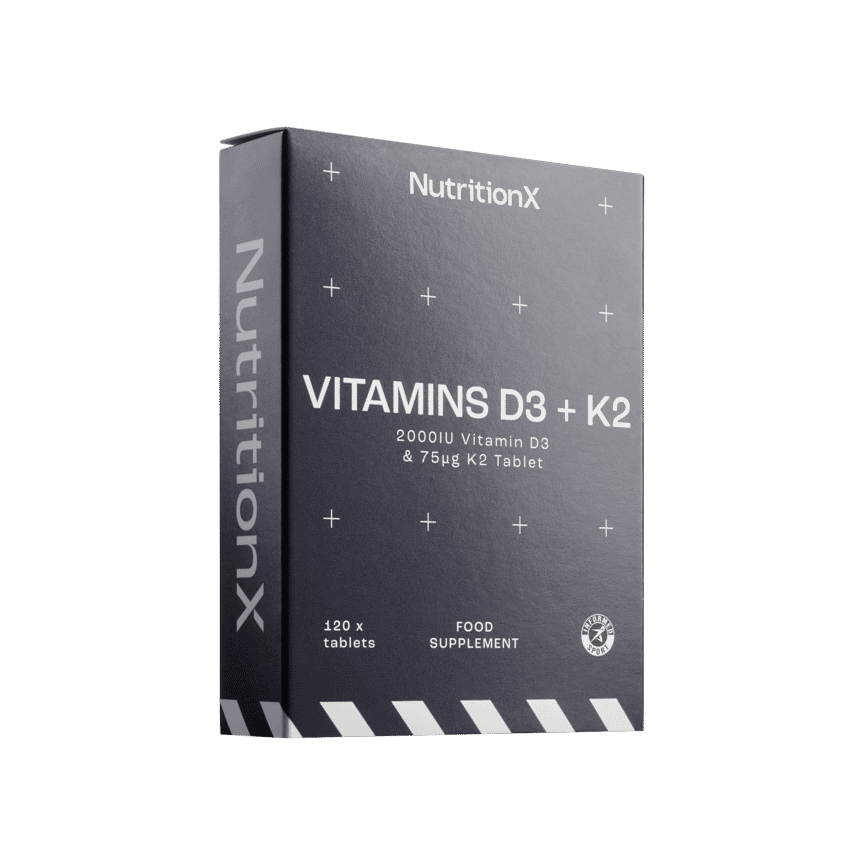
During the winter months, when the body can't make its own vitamin D from sunlight, a daily dose of 1,000-2,000IU of vitamin D3 has been shown to correct deficiency with no reported side effects. This is the range recommended for most athletes supplementing over autumn and winter.
In Summer, sensible sun exposure is usually enough on its own: around 15 minutes of sunlight on the arms and legs, without burning, helps to maintain vitamin D levels through the warmer months.
Vitamin D3 (cholecalciferol) is the form to choose over vitamin D2 (ergocalciferol). Research shows D3 is more effective at raising and maintaining blood vitamin D levels, so it should be the supplement of choice.
Can you take too much Vitamin D?
Yes you can, and this is a common misconception worth correcting directly. EFSA and the US Institute of Medicine both set the safe upper limit for vitamin D at 4,000IU per day. Our own research has found that megadosing (around 10,000IU per day) increases vitamin D breakdown (Owens et al., 2017), and a separate long-term study has linked the same dose to reduced bone mineral density (Burt et al., 2019). A moderate daily dose in the 1,000-2,000IU range remains the sensible choice.
How does vitamin D affect muscle function and recovery?
The evidence on vitamin D and muscle strength is mixed. Some studies have found no link between vitamin D status and muscle strength at all. In our own research, we found that supplementation improved 10-metre sprint times and vertical jump height, but only in athletes whose baseline vitamin D concentration was well below the adequate threshold of 50 nmol/L (Close et al., 2013a). When we repeated similar work in individuals who already had adequate baseline levels, we saw no additional benefit (Owens et al., 2013).
From a muscle metabolism perspective, a key study demonstrated that correcting severe vitamin D deficiency improved indices of aerobic metabolism (Sinha et al., 2013) and a recent meta-analysis suggests a small but significant association between vitamin D status and cardiorespiratory fitness (Chen et al., 2026).
There is more consistent evidence for vitamin D's role in muscle repair. Maintaining a vitamin D concentration above 50nmol/L, and potentially above 75nmol/L, has been linked to better muscle force recovery after exercise-induced muscle damage according to our research. This finding is later supported mechanistically by cell-based studies showing a possible role for vitamin D in supporting muscle rebuilding after injury (Owens et al., 2015).
The practical takeaway is that correcting an existing deficiency is what matters, not pushing already-adequate levels even higher.
How does vitamin D support the immune system?
After injury, illness is the single biggest cause of missed training and competition time for athletes (Walsh, 2019). Vitamin D has a well-established role in immune function; a landmark 2011 study found that every 10nmol/L increase in blood vitamin D was associated with a 7% reduction in infection risk (Berry et al., 2011). That association has since been observed in athletes, with one study finding that endurance athletes with low vitamin D status had more frequent upper respiratory infections over 16 weeks of winter training (He et al., 2013).
For athletes trying to protect training availability through a long winter block, this is one of the more practical reasons to keep vitamin D status topped up.
What happens if you're vitamin D deficient?
Left uncorrected, deficiency has been linked to reduced bone mineralisation and calcium absorption (Berry, Davies and Mee, 2002), particularly relevant for athletes prone to stress fractures, impaired muscle function at very low levels (Stockton et al., 2010), and reduced resistance to infection. Correcting a deficiency, rather than guessing, is the priority.
What are good food sources of vitamin D?
Diet alone rarely provides enough vitamin D, which is why sunlight exposure and supplementation matter so much. Still, food contributes to overall intake, with some good dietary sources including:
| Food | Vitamin D per serving |
| Mackerel | 540 IU |
| Salmon | 500 IU |
| Trout | 500 IU |
| Portobello mushrooms | 350 IU |
| Tuna | 50–200 IU |
| Fortified cereals | 100 IU |
| Pork | 50 IU |
| Egg yolk | 30 IU |
The bottom line
Vitamin D is essential for both athletic performance and general health, largely because of its impact on bone health, muscle function and recovery, and immune resilience. Most of the debate isn't about whether vitamin D matters, it's about getting the dose right: correct a genuine deficiency with a moderate daily dose of 1,000-2,000IU of D3 over winter, get sensible sun exposure in summer and avoid the temptation to megadose. If you're unsure where you stand, a blood test is the best starting point, with the result interpreted in context, including ancestry.
About the authors
Professor Graeme Close is a Professor of Human Physiology at Liverpool John Moores University, where he combines academic research (over 125 published papers) with nutrition and physiology consultancy for some of the world's leading sporting organisations. He is currently expert nutrition consultant to England Rugby, Head of Performance Nutrition to the European Tour Golf and European Ryder Cup Team, and consults to several Premier League football clubs and players. Graeme is Deputy Chair of the Sport and Exercise Nutrition Register (SENr), a Fellow of both the European College of Sport Science and the British Association of Sport and Exercise Sciences, and is Nutrition X's scientific advisor and editor-in-chief of the Nutrition X-Change.
Dr Daniel Owens is a Reader (Associate Professor) in Cellular and Molecular Sport and Exercise Physiology at Liverpool John Moores University. With >50 published research papers, his work examines how nutrition and exercise interact to influence athlete health and performance. Daniel has also provided nutrition and physiology support to a number of professional sports organisations, including British Ski and Snowboard, England Rugby, Warrington Wolves RLFC, Heart of Midlothian FC, Mercedes AMG Formula 1 driver George Russell as well as professional triathletes, marathon and ultramarathon runners.
References
Sinha A, Hollingsworth KG, Ball S, Cheetham T. Improving the vitamin D status of vitamin D deficient adults is associated with improved mitochondrial oxidative function in skeletal muscle. J Clin Endocrinol Metab. 2013 Mar;98(3):E509-13. doi: 10.1210/jc.2012-3592. Epub 2013 Feb 7. PMID: 23393184.
Chen Chen, Keith T S Tung, Mickey W K Suen, Jennfier K Y Ko, Hung Kwan So, Calvin K M Cheung, Albert Lee, Jason C S Yam, Ian C K Wong, Wing Cheong Leung, Xiaodan Yu, Patrick Ip, A Systematic Review and Meta-Analysis of the Association between Vitamin D and Cardiorespiratory Fitness, Nutrition Reviews, 2026.

Written by
Dr Dan Owens