

What is Vitamin D?
Vitamin D is best known for its vital role in bone health, but did you know that Vitamin D functions as a hormone in its active form, that can regulate many processes within the body? These include those related to muscle function and immune activity, and its status is often an important consideration for individuals with high training demands.
As the majority of Vitamin D is produced when the skin is exposed to sunlight, Vitamin D is often referred to as ‘The Sunshine Vitamin’. In fact, for most people, 80% of Vitamin D synthesis comes from sunlight and 20% from dietary intake; therefore during the winter months - when sunlight is limited (low UVB levels) - a Vitamin D supplement is advised.
Why do athletes need Vitamin D?
Vitamin D is a vital nutrient for overall health as it plays a key role in many physiological functions such as influencing bone health, muscle function and immune function., Athletes require Vitamin D to support their vigorous training demands, as there could be an association between low Vitamin D levels and stress fractures in athletes.
Vitamin D supplementation can aid muscle recovery, particularly in individuals with a deficiency. However, supplementation should be tailored to individual needs and baseline status. Minimising illness is also critical for athletes to maintain their high training volumes, which is supported by Vitamin D’s role in supporting the normal function of the immune system. Because of this, it is suggested that Vitamin D status influences the susceptibility to performance-limiting upper respiratory tract infections.
How much Vitamin D should athletes take per day?
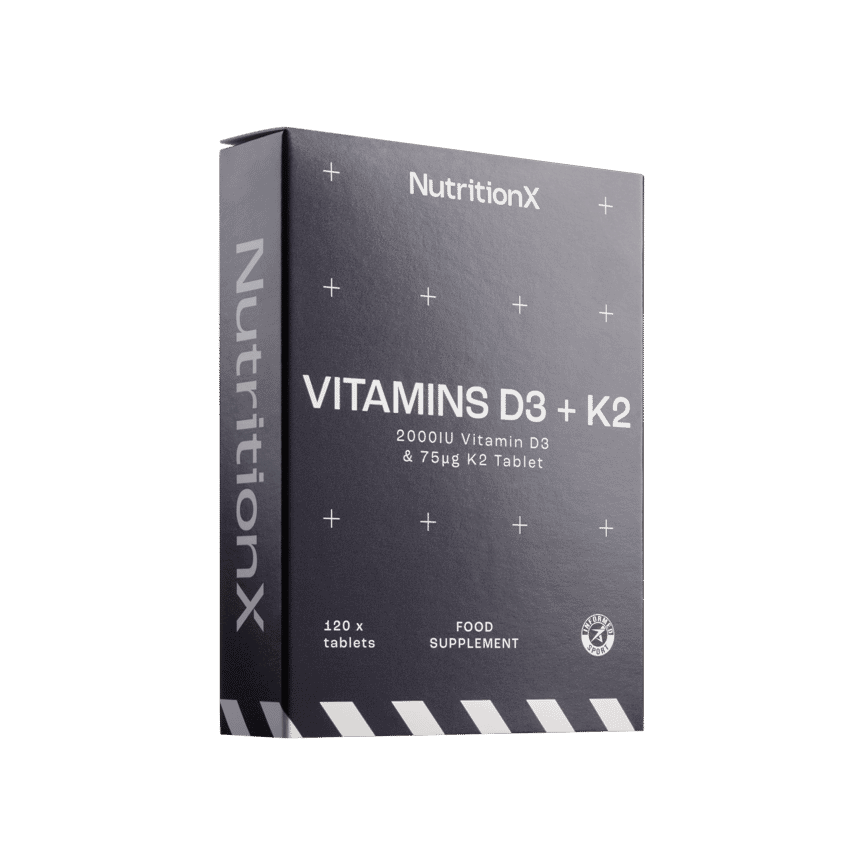
When possible, typically in summer months when sunlight hours are longer, everybody (not just athletes) should aim to get 5-30 minutes of good direct sunlight exposure to their face, arms and legs several times per week to produce enough Vitamin D. This will cover any need for a Vitamin D supplement. However we know this is not always possible for many reasons, with factors like the time of year, weather, indoor sports, skin coverage and use of sunscreen all influencing how much Vitamin D a person can make from sunlight. In situations where sunlight exposure and dietary intake are insufficient, some individuals choose to use a Vitamin D supplement like the Nutrition X High Strength Daily Vitamin D3 + K2 Tablets.
The Recommended Dietary Allowance (RDA) for adults is 600-800 IU per day but may not be enough to meet the higher needs of athletes. The European Food Safety Authority advises a safe daily upper limit of 4,000IU, whereas the US Institute of Medicine states a no adverse effect limit of 10,000IU/day. What we do know is that a dose of 2000IU per day is commonly used in research and remains well within established safety guidelines.
For more accurate guidance on Vitamin D intake, it is recommended athletes get a blood test to measure their current Vitamin D levels first.
How do I supplement with Vitamin D?
A daily dose of Vitamin D3 (2,000IU) - such as that found in our High Strength Daily Vitamin D3 + K2 Tablets - has supported evidence to be a safe dose with no risk of toxicity, ideal for use during winter months where sunlight exposure is low. Athletes who are unsure about their Vitamin D status, or have a history of bone injury or signs of overtraining, may find it helpful to assess their blood Vitamin D status before deciding on a supplementation plan.
Why should you take Vitamin D with Vitamin K2?
Vitamin D and Vitamin K2 are two nutrients that play complementary roles in calcium metabolism.. Vitamin D helps your body absorb calcium from food, which is essential for strong bones and muscle function. Vitamin K2 activates proteins that use calcium in your bones. For athletes training hard, supporting bone health, reducing injury risk and maintaining long-term wellbeing, this combination makes sense. Pairing Vitamin D with K2 is a way to ensure both nutrients are present to support their respective roles in the body.
When should you take Vitamin D supplements?
When it comes to timing your Vitamin D supplement, consistency and absorption are key. Vitamin D is fat soluble, which means it is recommended to be taken with a meal that contains some dietary fat, as this can support absorption. Many people prefer taking it with lunch or dinner when fat intake is naturally higher. The specific time of day is less important than taking it consistently as part of a routine. In the UK, Vitamin D supplementation is recommended during autumn and winter when sunlight exposure is limited and natural production could drop significantly. During spring and summer, individual needs may vary, depending on lifestyle and skin exposure. Matching your Vitamin D intake to both your daily routine and the time of year helps to ensure you get the most benefit without overdoing it.
Can Vitamin D improve athletic performance?
Maintaining optimal Vitamin D levels is linked to the maintenance of normal muscle function and normal bone health. There is also good evidence to suggest that correcting Vitamin D deficiencies in athletes has a significant improvement on many markers of athletic performance. For example, our very own Professor Graeme Close has examined the associations between Vitamin D status and physical qualities, demonstrating significant improvements in sprint performance, vertical jump height and muscular strength in athletes; ranging from jockeys to football and rugby league players. Read all about it here: https://www.tandfonline.com/doi/abs/10.1080/02640414.2012.733822
What happens if I’m Vitamin D deficient?
Despite Vitamin D being a well-known vitamin for overall wellbeing, Vitamin D deficiencies are common in the general population, as well as among athletes; particularly during winter when there is a lack of sunlight exposure. Vitamin D deficiency may go unnoticed by athletes, but could contribute to a reduced immune function, poor bone health and potentially perturbed muscle function and regenerative capacity.
As mentioned, bone health could be compromised as a result of low Vitamin D levels, as it plays an important role in calcium absorption and bone formation. Without it, athletes may experience an increased risk of stress fractures. It is also worth noting that there is emerging evidence that increasing Vitamin D concentration may enhance muscle remodelling following injury, especially in individuals with low baseline levels. However more research is needed to clarify protocols for supplementation in muscle injury recovery,
After injury, infection or illness are the most common issues impacting sports performance for athletes at all levels. Therefore, the maintenance of immune health should be a reason to ensure adequate Vitamin D levels as part of a broader nutrition plan, especially during low-sunlight periods. Research supports that sufficient Vitamin D levels may modestly reduce the risk of some infections, especially if they are deficient.
What are the signs of a Vitamin D deficiency?
Symptoms can vary widely between individuals, and many people experience no obvious signs at all. However, research and clinical observations have identified several non-specific symptoms that may be associated with low Vitamin D levels:
Feeling of tiredness or reduced energy
Low mood
Bone and muscle weakness/pains
Recurring injuries
Regularly getting colds and illness
Poor sleep quality
How does a Vitamin D deficiency affect athletes?
A Vitamin D deficiency has a negative impact on an athlete’s maintenance of bone health and muscle and immune system function. Low Vitamin D levels could be associated with reduced muscular function, changes in training availability or interruptions due to illness.
What are good food sources of Vitamin D for athletes?
Food sources of Vitamin D include oily fish, egg yolk, liver,dairy products and foods that have been fortified with Vitamin D, such as breakfast cereals or plant-based alternatives. These foods can contribute to overall Vitamin D intake, but they could not contain meaningful amounts. For many people, particularly during winter when sunlight exposure is low, maintaining adequate Vitamin D levels can be more challenging, which is why some athletes choose to use a Vitamin D supplement like High Strength Daily Vitamin D3 Tablets, as part of their routine.
Specific food sources of Vitamin D include:
Oily fish
Mushrooms
Eggs
Liver
Dairy products
Fortified breakfast cereals
Fortified soya or plant-based products
We also have a great in-depth read on Vitamin D through our Nutrition X-Change papers which you can check out here: https://www.nutritionx.co.uk/nutrition-hub/x-change/nutrition-x-change-vitamin-d-the-sunshine-vitamin/
Check out our Daily Vitamin D3+K2 Tablet here.

Written by
Nutrition X