

Meeting protein and carb needs is important, but for youth athletes, getting enough total energy can be the real challenge. In this latest X-Change, Dr Marcus Hannon and Professor Graeme Close break down why daily calorie intake matters so much for growth, recovery and performance - and what parents, coaches and players can do to keep young athletes properly fuelled.
Read the full X-Change article here or download the pdf via the button below
INTRODUCTION
For years youth athletes (typically defined as those under 18 years of age) have competed at the highest echelons of their sport. In 1998, Ian Thorpe became the youngest ever 400m freestyle world champion at 14 years old. Tom Daley competed in the 10m platform (diving) at the 2008 Beijing Olympics, aged 14. At only 11 years old, Anna Hursey competed at the 2018 Gold Coast Commonwealth Games in table tennis. Sky Brown won a bronze medal in skateboarding at the 2020 Toyko Olympics, becoming Great Britain’s youngest ever medal winner at the age of 13. In 2023 Lamine Yamal became Spain’s youngest ever capped international and goal scorer (football) aged 16. The list goes on… Yet despite some youth athletes competing against their adult counterparts at the highest level, they should not be considered “mini adults.” Whilst it might be pragmatic to simply apply sports nutrition recommendations for adult athletes to youth athletes, there are many reasons why this is inappropriate.
As a youth athlete progresses from childhood (from birth until the onset of adolescence) through adolescence (identified with the onset of sexual maturation) and into adulthood (achieved once maturation has occurred, i.e., fully ossified skeletal system, a fully functioning reproductive system, or the attainment of adult stature), they undergo many anatomical, physiological, and metabolic changes due to biological growth and maturation (please see Malina, Bouchard and Bar-Or, 2004 for a comprehensive overview).
Growth and maturation are complex processes that are influenced by the interaction of genes, nutrients, and the environments in which an individual lives. Therefore, nutritional recommendations for youth athletes should not only focus on sporting performance but first ensure that the requirements for optimal growth, maturation and development are met. Additionally it is also important to remember the psychosocial development that occurs as a youth athlete matures and consider the role that nutrition can play in safeguarding a life-long positive relationship with food, drink and body image.
Compared to their adult counterparts, most youth athletes face unique daily challenges which are likely to influence their nutritional intake. This population typically have schooling requirements to fulfil on top of their sporting schedule, resulting in long and busy days during which feeding opportunities may be limited (Stables et al., 2022). Youth athletes typically receive less nutritional support than senior athletes (be that exposure to a qualified nutrition practitioner and/or reduced food and drink provision) despite often experiencing similar training and competition loads (Carney et al., 2023). It is also important to consider that youth athletes are not always in full control of what and when they eat and drink, with parents and guardians often influencing these decisions. If we are to truly use nutrition to enhance the performance of youth athletes, perhaps it is these carers that require as much nutritional support from practitioners as the athletes themselves.
This article will be the first of a two-part article focusing primarily on arguably one of the most important nutritional components of any youth athletes’ nutrition, achieving daily energy requirements. Key considerations and the practical application of “how to” achieve these nutritional requirements will be discussed. Part two of this article will cover additional nutritional considerations that require particular attention for the youth athlete including specific micronutrients, diet quality and variety, the importance of instilling lifelong heathy habits and influencing dietary intake.
ENERGY EXPENDITURE
To promote optimal health and performance, one of the key goals for any youth athlete is to ensure they meet their energy requirements for (1) growth, maturation and physical development and (2) for the demands of exercise (i.e. substrate requirements for general activity and their sport specific training and competition). To achieve this, it is essential that a youth athlete at least matches their energy intake to their energy expenditure, ideally achieving a slight yet consistent positive daily energy balance that meets their requirements. As such, the energy expenditure of a youth athlete determines their required energy intake and subsequent macronutrient requirements in line with their individualised health, physical development, and performance goals. Consequently, it is first essential to understand the energy expenditure (and its sub-components) of a youth athlete before considering their dietary energy and macronutrient needs.
RESTING METABOLIC RATE
Resting metabolic rate (RMR; the amount of energy required to sustain homeostatic physiological function in a rested state), the thermic effect of food (also known as diet-induced thermogenesis; the amount of energy required for digestion, absorption and transport of nutrients) and activity energy expenditure (AEE) are the three major components that contribute towards total daily energy expenditure (TDEE; see Figure 1). In growing individuals, such as youth athletes, there is also a small amount of energy required for tissue growth (~5 kcal per gram of weight gain; Torun, 2005).
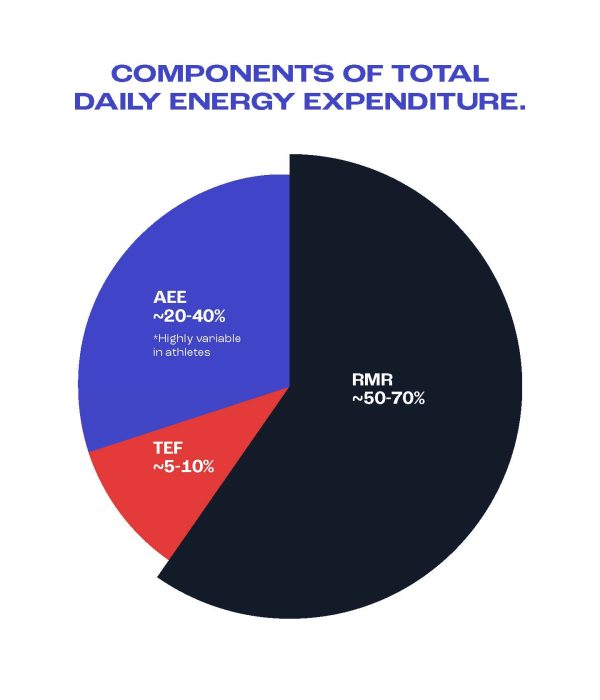
Figure 1: Components Of Total Daily Energy Expenditure
RMR = resting metabolic rate.
TEF = thermic effect of food.
AEE = activity energy expenditure.
Progressive increases in body size, particularly fat-free mass (FFM; the most metabolically active compartment), lead to increases in RMR (Smith et al., 2018; Hannon et al., 2020). This has been reported in both young male and female athletes from a range of different sports, with RMR values in males typically higher than females due to higher amounts of FFM (Reale et al., 2020). Ethnicity may also influence RMR (Henry, 2005). Recent observations from a large data set of over 6,000 participants, inclusive of youth athletes, concluded that RMR continues to increase with biological and chronological age until 18 years, despite steady decreases of −3.8 ± 0.2% per year in body size-adjusted RMR after which there is no further increase in RMR (Pontzer, 2022). RMR may be measured directly (heat production via whole body calorimetry) or indirectly (via oxygen consumption and carbon dioxide production), however the latter is the most commonly used method in both research and applied practice (Compher et al., 2006). Given the difficulties of measuring RMR in youth athletes (due to standardisation of assessment conditions and time), numerous different prediction equations have been developed, however many of these equations underestimate RMR making them unsuitable for use (Smith et al., 2018; Hannon et al., 2020; Reale et al., 2020; O’Neill, Corish and Horner, 2023). A prediction equation should only be used in practice if there is a population specific equation available (i.e. it was developed using data from the same population in which it will be used, e.g. young female footballers). Reale and colleagues recently developed an RMR prediction equation from young male and female athletes (n = 126) from various sports between the ages of 13-20 years (Reale et al., 2020), whilst there are more specific equations available, for example, one for male academy (U12-U23 age-groups) footballers (Hannon et al., 2020):
- Reale equation: RMR (kcal·day-1) = (11.1 × body mass, kg) + (8.4 × height, cm) – (340 for males or 537 for females)
- Hannon equation: RMR (kcal·day-1) = 1254 + (9.5 x body mass, kg)
Research has also shown that following competitive match-play RMR is significantly elevated (from baseline) for at least 24 hours in academy soccer players (~12% increase at 24-hours post-match; Carter et al., 2023) and at least 72 hours in academy rugby players (23%, 24% and 9% at 24-, 48- and 72-hours post-match, respectively; Costello et al., 2019). The increased and prolonged elevations in RMR in academy rugby players are likely due to collisions and the contact nature of the sport. These data highlight the increased ‘energy cost’ of recovery and as such energy and macronutrient intake should be adjusted accordingly in this period.
ACTIVITY ENERGY EXPENDITURE
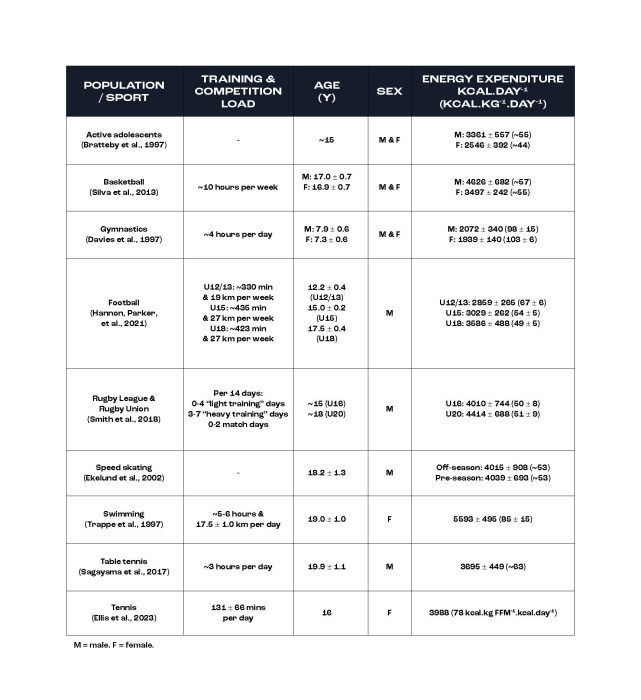
In youth athletes, especially those undertaking high amounts of training and competition, AEE may become the greatest contributor to TDEE (Torun, 2005; Silva et al., 2013). Exercise type, duration and intensity as well as anthropometric profile all influence AEE, and thus TDEE. Considering the many factors that contribute towards a young athlete’s TDEE, this value is highly variable between individuals (even within the same sport) and will almost certainly vary day-to-day, making it difficult to prescribe exact daily energy requirements for young athletes. Research studies using gold-standard methods (such as the doubly labelled water technique) to assess TDEE provide an insight into typical expenditures of the specific youth athlete population that was assessed (see Table 1). For youth athletes training and competing in only one sport their AEE and TDEE will typically increase in a hierarchal manner as they get older, they grow in size and often their training and competition volume and intensity increases (Smith et al., 2018; Hannon et al., 2020). For example, we reported that the TDEE of Premier League academy football players increased as they progress through the academy pathway (U12/13: 2859 ± 265 kcal·day-1 < U15: 3029 ± 262 kcal·day-1 < U18: 3586 ± 488 kcal·day-1; Hannon et al., 2021). These data also highlighted that the TDEE of some academy players (as evidenced in all age-groups) is equal to and in some cases higher than professional adult players, also quantified via doubly labelled water (Anderson et al., 2017; Brinkmans et al., 2019). It is also clear that youth athletes enrolled in “formalised” training programmes (e.g. professional academies) expend more calories than their recreational level counterparts. Recent data from our group revealed that football players from a Premier League academy typically expend ~750 kcal·day-1 more than age-matched “grassroots” level players (3380 ± 517 kcal·day-1 versus 2641 ± 308 kcal·day-1) likely due to increased training and match loads (Stables et al., 2023).
TABLE 1: TOTAL DAILY ENERGY EXPENDITURES OF YOUTH ATHLETES FROM DIFFERENT SPORTS
ACHIEVING ENERGY REQUIREMENTS
ENERGY AVAILABILITY
Although it can be difficult to prescribe exact daily energy requirements for youth athletes, it is strongly recommended that young athletes are not in a negative energy balance and have sufficient energy availability (EA) for growth and maturation. Energy availability is the amount of energy left for homeostatic physiological functions and growth once AEE has been deducted from energy intake (EI) and is relative to FFM: EA = (EI – AEE) / FFM). Failing to match daily energy intake to energy expenditure chronically may result in low energy availability (LEA), often defined as <30 kcal·kg FFM-1·day-1, though it is noteworthy that this cut-off is based on laboratory investigations of adult populations (Mountjoy et al., 2023). LEA which is prolonged and/or severe may result in negative health and performance outcomes often referred to as relative energy deficiency in sport (REDs). Whilst the negative consequences of LEA are often considered from a performance perspective, perhaps more pertinent and concerning for youth athletes are the detrimental health implications (see Figure 2). Impaired growth and maturation of tissues and organs, delayed sexual maturation, reduced skeletal bone mineral accrual (increasing risk of fractures and of osteoporosis later in life) and suppression of the immune system (Loucks, Kiens and Wright, 2011; Mountjoy et al., 2023) are just some of the consequences which may be detrimental to long-term athletic development.
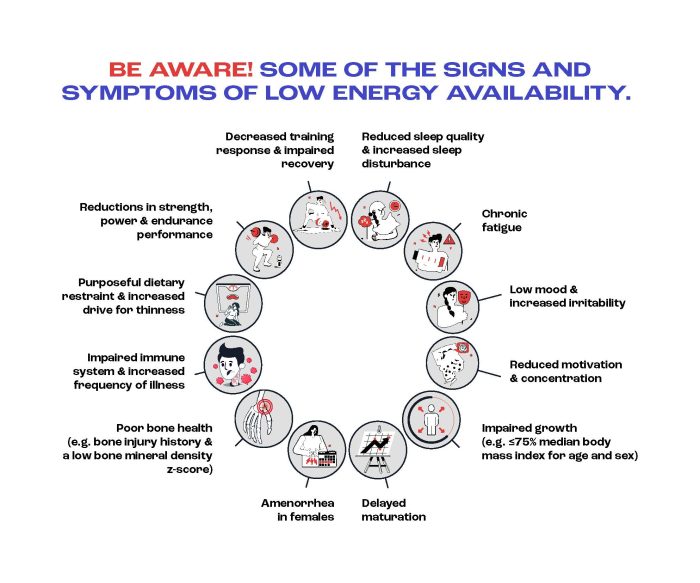
Figure 2
ENERGY INTAKE
Energy intake is provided through the consumption of the macronutrients carbohydrate, fat and protein. While there are some differences in substrate storage and metabolism between youth and adult athletes, the macronutrient requirements of youth athletes are not dissimilar from those of their adult counterparts (see Hannon, Close and Morton, 2020 for a more detailed review). Table 2 provides a summary of the key physiological roles, recommended intakes and dietary sources of these macronutrients. For youth athletes that struggle to achieve their daily energy requirements, increasing portion size or the frequency of meals and snacks are obvious ways to increase energy intake. Including high fat containing foods such as oily fish, avocado, oils, nuts and nut butters in the diet is also a good way to increase overall energy intake. Choosing full-fat options (e.g. dairy products) and certain food swaps e.g. oily fish over white fish, red meat over chicken, bagels over bread are also easy ways to increase calories and reduce the likelihood of LEA.

In recent years many adult athletes have begun the practice of manipulating energy intake (primarily via carbohydrate manipulation) on a meal-by-meal or day-by-day basis according to their training schedule to enhance training adaptations or to achieve a desired body composition. The deliberate periodisation of energy is known as “fuelling for the work required” (Impey et al., 2016), however this concept may not be as important for youth athletes compared to adults and indeed, maybe counter-productive and lead to LEA. Youth athletes in many sports strive to develop physically, increasing their FFM towards that of their adult counterparts during which period a slight energy surplus may be advantageous (Smith et al., 2018; Hannon et al., 2020). During adolescence youth athletes are also continually growing until adult stature is achieved and there is often a distinct lack of periodisation in training load throughout the weekly micro-cycle (Hannon, Coleman, et al., 2021). Considering these factors, the deliberate reduction of energy intake on “off / rest days”, particularly in those that are still growing, is not advised for youth athletes (Mathisen et al., 2023).
Nutritional strategies for youth athletes have traditionally focused on meeting total daily requirements, however the importance of timing of energy and macronutrient intake is becoming increasingly recognised. Sub-optimal carbohydrate intake before and/or during training and competition can reduce both physical (Phillips et al., 2010, 2012) and technical skill (Dougherty et al., 2006; Russell, Benton and Kingsley, 2012) performance. Additionally, the intake of carbohydrate before, during and after exercise can also affect the acute regulation of bone turnover (Stables et al., 2024), thus having obvious relevance for the youth athlete given the requirement to accrue bone mass and maximise skeletal development during the adolescent years (Costa et al., 2022). We recently reported that training with reduced carbohydrate availability increases bone resorption in academy soccer players (Stables et al., 2024). If practised regularly over a period of weeks and months, this may contribute to an increased risk of bone stress related injuries and compromise bone development at a time when growth related injuries are most prevalent (Hall et al., 2020). Protein consumption is of particular importance at breakfast (Karagounis et al., 2018), after exercise (Kimberly A Volterman et al., 2017; Kimberly A. Volterman et al., 2017) and before sleep (Snijders et al., 2019). This regular intake of protein, every 3-4 hours throughout the day is important to stimulate muscle protein synthesis and promote the growth of FFM (Boisseau et al., 2007; Aerenhouts et al., 2013).
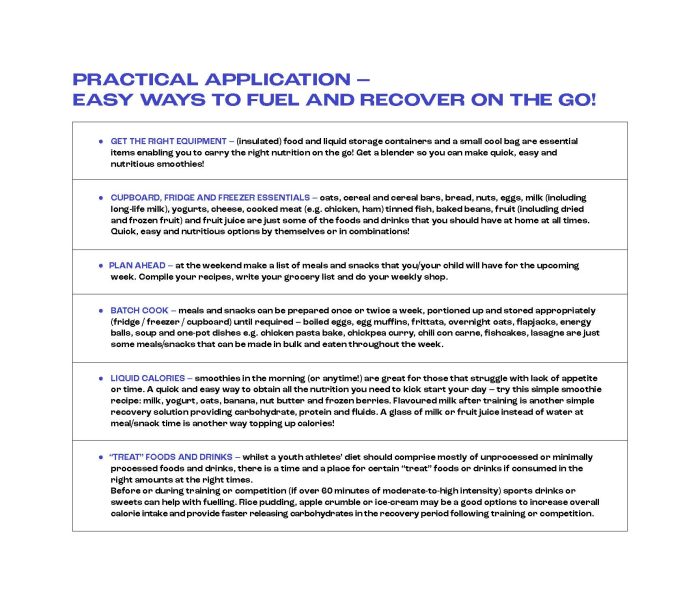
Despite this, the energy and macronutrient intake of youth athletes is typically skewed throughout the day. Naughton et al., (2016) reported that carbohydrate and protein intake is lower at breakfast compared to lunch and dinner in academy soccer players. Research also demonstrates that both young male and female athletes from various sports under-consume carbohydrate in the hours before and after training, irrespective of training time (morning, afternoon or evening) (Baker et al., 2014; Stables et al., 2022). These sub-optimal fuelling and recovery practices may be due to the athlete or their parent/guardian lacking the capability (e.g. poor nutrition knowledge and/or food preparation and cooking skills), the opportunity (e.g. face logistical challenges amongst a busy school, travel and training schedule and/or an absence of food and drink provision at the training facility) or the motivation (e.g. lack of belief in the performance implications certain fuelling/recovery practices and/or a fear of carbohydrates) (Michie, van Stralen and West, 2011; McHaffie et al., 2022; Jennie L Carter et al., 2023). It therefore becomes readily apparent that nutrition education programmes for both players and stakeholders (e.g., parents, coaches, support staff, etc.) should align on both the technical knowledge and practical execution of strategies to ensure sufficient energy and macronutrient intake, particularly in the hours before and after training and competition.
 PHYSICAL DEVELOPMENT AND BODY COMPOSITION MONITORING
ANTHROPOMETRIC CHANGES AND ASSESSMENT
One way to infer if energy intake is sufficient is to monitor the progression of growth (e.g., stature and body mass) and somatic maturation (e. g., maturity offset or percentage of predicted adult stature), in addition to being alert to symptoms of LEA (see Figure 2). This is of particular importance considering the inherent difficulty in accurately measuring both energy expenditure and energy intake in practice. Considering that energy and macronutrient requirements are typically prescribed per kilogram of body mass, regular monitoring of growth (particularly body mass) during adolescence can be a useful tool (when conducted appropriately) to subsequently adjust the nutritional requirements of an individual accordingly and prevent chronic LEA.
Stature and body mass should be measured under standardised conditions no more than once per month. Regular assessments enable calculation of individual growth rates (e.g. cm per year or kg per year) and longitudinal growth curves to be plotted and subsequently compared with age-appropriate reference growth charts (e.g. World Health Organisation data - www.who.int/tools/child-growth-standards/standards). Peak height velocity (PHV - the maximum rate of growth in stature during adolescence) typically occurs around 11-13 years in females and 13-14 years in males although this is highly individual. Youth athletes that reach PHV a year before or after the mean age of PHV for their peers are considered “early” or “late” maturers, respectively. PHV precedes peak weight velocity (PWV - the maximum rate of growth in body mass during adolescence; Lloyd et al., 2014; Malina et al., 2015).
BODY COMPOSITION CHANGES AND ASSESSMENT
Body composition can be separated into different compartments (based on each compartments composition of different tissues), including fat-free mass (FFM), fat mass and bone mineral content. One of the main physical development goals of youth athletes is to increase FFM towards that of their adult counterparts. Therefore, practitioners should prioritise monitoring changes in FFM over changes in body fat, no more than 4-6 times per year (Mathisen et al., 2023). In young female athletes, FFM increases throughout adolescence but at a slower rate compared to males, with adult values achieved by around 15-16 years old. There are also increases in absolute (kg) and relative (%) body fat as young female athletes progress through PHV (Malina R. M.; Geithner, 2011). In males, absolute fat mass is similar between youth and adult athletes, with FFM increasing with (biological and chronological) age. As such, younger athletes typically present with a higher percent body fat compared to adult athletes (Malina R. M.; Geithner, 2011; Geeson-Brown et al., 2020; Hannon et al., 2020). These higher percent body fat values observed in younger athletes are a product of possessing lower FFM and not actually due to higher amounts of absolute fat mass. Therefore, when a youth athlete presents with what is perceived as a high body fat percentage, the most appropriate strategies may be interventions that promote increases in FFM (e.g., optimal energy and protein intakes and exposure to an appropriate resistance training programme), as opposed to strategies designed to reduce body fat per se (e.g., restriction of energy intake and/or increased energy expenditure). In this way, youth athletes are more likely to achieve a body composition that is more representative of adult athletes, and therefore potentially cope with the increased physical training and competition demands. Furthermore, youth athletes that are still growing and that compete in “weight making” or “weight sensitive” sports (e.g. combat sports or gymnastics) are not advised to purposefully manipulate body composition for competition (Mathisen et al., 2023).
To date, body composition assessments in youth athletes (in both scientific research and applied practice) are often measured via skinfold callipers to determine sum of skinfold thickness (Malina R. M.; Geithner, 2011). Whilst this method may be cheap, quick and generally reliable, it provides an indication of fat mass rather than FFM, and as such should not be used in growing and maturing athletes. Skinfold thickness is also often used to estimate percent body fat and percent FFM using different available prediction equations (Malina R. M.; Geithner, 2011). However, these equations are developed on specific populations (e.g., non-athletic adolescents or adults) and when applied to different populations from which they were developed (e. g., youth male or female athletes), often have a high degree of error. As such, many practitioners working with athletes no longer report body fat percentage and instead use sum of skinfolds (Mathisen et al., 2023).
Dual-energy X-ray absorptiometry (DXA) is another method that can be used to determine body composition in youth athletes. DXA is a three-compartmental method (i.e., fat mass, FFM and bone mineral content), which provides body composition at both whole body and regional level (i.e., arms, trunk, legs) and is often considered the reference method for assessing body composition (Nana et al., 2016). However, whilst DXA is a quick and reliable method its use in applied practice is limited due to the availability of necessary equipment and expertise, alongside exposure to radiation (albeit a small and generally safe dose). Body composition assessment by DXA (in particular FFM) is influenced by the nutritional status (e.g., hydration, glycogen and creatine content) of the individual being scanned. Therefore, it is important that scans are completed under standardised conditions, typically in a fasted and euhydrated state, following a day of minimal exercise (Nana et al., 2016).
Youth athletes and relevant stakeholders (including coaches, support staff and parents/guardians) should be educated on the relationship between nutrition, exercise, growth, maturation and physical development and why specific anthropometric and body composition measures are important to monitor. Anthropometric and body composition assessments and subsequent reporting and dissemination of this data should adhere to best practice protocols (Mathisen et al., 2023). Stakeholders working with youth athletes should not place too much emphasis on the influence of body composition on sporting performance and should advocate positive body image.
CONCLUSION
As a youth athlete progresses through adolescence into adulthood, they undergo a period of rapid biological growth and maturation during which their energy requirements increase. Logistical challenges associated with demanding school and sporting schedules, limited nutrition support and a reliance on parents/guardians to oversee their nutrition provision make this population susceptible to periods of low energy availability. As such, ensuring energy requirements are met on a daily basis should be the nutrition priority for all youth athletes. Proper planning and preparation will help ensure that no meals or snacks are missed and that youth athletes are properly fuelled for training and competition and that they recover optimally after. Regular assessments of stature and body mass are important for monitoring growth and maturation, and from a body composition perspective youth athletes should focus on maximising development of fat-free mass. Whilst consuming enough calories may be the biggest nutritional challenge that a youth athlete faces, there are additional nutritional considerations which will be covered in part 2 of this article.
REFERENCES
Aerenhouts, D. et al. (2013) ‘Influence of growth rate on nitrogen balance in adolescent sprint athletes.’, International journal of sport nutrition and exercise metabolism, 23(4), pp. 409–17. doi: 10.1123/ijsnem.23.4.409.
Anderson, L. et al. (2017) ‘Energy Intake and Expenditure of Professional Soccer Players of the English Premier League: Evidence of Carbohydrate Periodization’, International Journal of Sport Nutrition and Exercise Metabolism, 27(3), pp. 228–238. doi: 10.1123/ijsnem.2016-0259.
Baker, L. B. et al. (2014) ‘Dietitian-Observed Macronutrient Intakes of Young Skill and Team-Sport Athletes: Adequacy of Pre, During, and Postexercise Nutrition’, pp. 166–176.
Boisseau, N. et al. (2007) ‘Protein requirements in male adolescent soccer players’, European Journal of Applied Physiology, 100(1), pp. 27–33. doi: 10.1007/s00421-007-0400-4.
Bratteby, L.-E. et al. (1997) ‘A 7-day activity diary for assessment of daily energy expenditure validated by the doubly labelled water method in adolescents’, European Journal of Clinical Nutrition, 51(9), pp. 585–591. doi: 10.1038/sj.ejcn.1600449.
Brinkmans, N. Y. J. et al. (2019) ‘Energy expenditure and dietary intake in professional football players in the Dutch Premier League: Implications for nutritional counselling’, Journal of Sports Sciences, 37(24), pp. 2759–2767. doi: 10.1080/02640414.2019.1576256.
Carney, D. J. et al. (2023) ‘An audit of performance nutrition services in English soccer academies: implications for optimising player development’, Science and Medicine in Football, 7(2), pp. 146–156. doi: 10.1080/24733938.2022.2055785.
Carter, Jennie L. et al. (2023) ‘Perspectives of the barriers and enablers to nutritional adherence in professional male academy football players.’, Science & medicine in football, 7(4), pp. 394–405. doi: 10.1080/24733938.2022.2123554.
Carter, Jennie L. et al. (2023) ‘Significant Changes in Resting Metabolic Rate Over a Competitive Match Week Are Accompanied by an Absence of Nutritional Periodization in Male Professional Soccer Players’, International Journal of Sport Nutrition and Exercise Metabolism, 33(6), pp. 349–359. doi: 10.1123/ijsnem.2023-0069.
Compher, C. et al. (2006) ‘Best Practice Methods to Apply to Measurement of Resting Metabolic Rate in Adults: A Systematic Review’, Journal of the American Dietetic Association, 106(6), pp. 881–903. doi: 10.1016/j.jada.2006.02.009.
Costa, D. C. et al. (2022) ‘Growth, body composition and bone mineral density among pubertal male athletes: intra-individual 12-month changes and comparisons between soccer players and swimmers.’, BMC Pediatrics, 22(1), p. 275. doi: 10.1186/s12887-022-03321-2.
Costello, N. et al. (2019) ‘Three-day changes in resting metabolism after a professional young rugby league match’, Sport Performance & Science Reports, 49, pp. 1–3.
Davies, P. S. W. et al. (1997) ‘Total Energy Expenditure and Physical Activity in Young Chinese Gymnasts’, Pediatric Exercise Science, 9(3), pp. 243–252. doi: 10.1123/pes.9.3.243.
Dougherty, K. A. et al. (2006) ‘Two percent dehydration impairs and six percent carbohydrate drink improves boys basketball skills.’, Medicine and Science in Sports and Exercise, 38(9), pp. 1650–8. doi: 10.1249/01.mss.0000227640.60736.8e.
Ekelund, U. et al. (2002) ‘Energy expenditure assessed by heart rate and doubly labeled water in young athletes’, Medicine & Science in Sports & Exercise, 34(8), pp. 1360–1366. doi: 10.1097/00005768-200208000-00019.
Ellis, D. G. et al. (2023) ‘An Observational Case Series Measuring the Energy Expenditure of Elite Tennis Players During Competition and Training by Using Doubly Labeled Water’, International Journal of Sports Physiology and Performance, 18(5), pp. 547–552. doi: 10.1123/IJSPP.2022-0297.
Geeson-Brown, T. et al. (2020) ‘Body composition differences by age and playing standard in male rugby union and rugby league: A systematic review and meta-analysis.’, Journal of Sports Sciences, 38(19), pp. 2161–2176. doi: 10.1080/02640414.2020.1775990.
Hall, E. C. R. et al. (2020) ‘An injury audit in high-level male youth soccer players from English, Spanish, Uruguayan and Brazilian academies.’, Physical Therapy in Sport, 44, pp. 53–60. doi: 10.1016/j.ptsp.2020.04.033.
Hannon, M. P. et al. (2020) ‘Cross-sectional comparison of body composition and resting metabolic rate in Premier League academy soccer players: Implications for growth and maturation’, Journal of Sports Sciences, 38(11–12), pp. 1326–1334. doi: 10.1080/02640414.2020.1717286.
Hannon, M. P., Parker, L. J. F., et al. (2021) ‘Energy Requirements of Male Academy Soccer Players from the English Premier League’, Medicine and Science in Sports and Exercise, 53(1), pp. 200–210. doi: 10.1249/MSS.0000000000002443.
Hannon, M. P., Coleman, N. M., et al. (2021) ‘Seasonal training and match load and micro-cycle periodization in male Premier League academy soccer players’, Journal of Sports Sciences, 39(16), pp. 1838–1849. doi: 10.1080/02640414.2021.1899610.
Hannon, M. P., Close, G. L. and Morton, J. P. (2020) ‘Energy and Macronutrient Considerations for Young Athletes’, Strength & Conditioning Journal, 42(6), pp. 109–119. doi: 10.1519/ssc.0000000000000570.
Henry, C. (2005) ‘Basal metabolic rate studies in humans: measurement and development of new equations’, Public Health Nutrition, 8(7a), pp. 1133–1152. doi: 10.1079/PHN2005801.
Impey, S. G. et al. (2016) ‘Fuel for the work required: a practical approach to amalgamating train-low paradigms for endurance athletes.’, Physiological Reports, 4(10), p. e12803. doi: 10.14814/phy2.12803.
Karagounis, L. G. et al. (2018) ‘Protein Intake at Breakfast Promotes a Positive Whole-Body Protein Balance in a Dose-Response Manner in Healthy Children: A Randomized Trial’, The Journal of Nutrition, 148(5), pp. 729–737. doi: 10.1093/jn/nxy026.
Lloyd, R. S. et al. (2014) ‘Chronological age vs. biological maturation: implications for exercise programming in youth.’, Journal of Strength and Conditioning Research, 28(5), pp. 1454–64. doi: 10.1519/JSC.0000000000000391.
Loucks, A. B., Kiens, B. and Wright, H. H. (2011) ‘Energy availability in athletes’, Journal of Sports Sciences, 29(SUPPL. 1). doi: 10.1080/02640414.2011.588958.
Malina, R. M.; Geithner, C. A. (2011) ‘Body Composition of Young Athletes’, American Journal of Lifestyle Medicine. doi: 10.1177/1559827610392493.
Malina, R. M. et al. (2015) ‘Biological maturation of youth athletes: assessment and implications’, British Journal of Sports Medicine, 49(13), pp. 852–859. doi: 10.1136/bjsports-2015-094623.
Malina, R. M., Bouchard, C. and Bar-Or, O. (2004) Growth, Maturation and Physical Activity. Second edn. Human Kinetics.
Mathisen, T. F. et al. (2023) ‘Best practice recommendations for body composition considerations in sport to reduce health and performance risks: a critical review, original survey and expert opinion by a subgroup of the IOC consensus on Relative Energy Deficiency in Sport (REDs).’, British Journal of Sports Medicine, 57(17), pp. 1148–1158. doi: 10.1136/bjsports-2023-106812.
McHaffie, S. J. et al. (2022) ‘Carbohydrate fear, skinfold targets and body image issues: a qualitative analysis of player and stakeholder perceptions of the nutrition culture within elite female soccer.’, Science & Medicine in Football, 6(5), pp. 675–685. doi: 10.1080/24733938.2022.2101143.
Michie, S., van Stralen, M. M. and West, R. (2011) ‘The behaviour change wheel: a new method for characterising and designing behaviour change interventions.’, Implementation Science, 6(1), p. 42. doi: 10.1186/1748-5908-6-42.
Mountjoy, M. et al. (2023) ‘2023 International Olympic Committee’s (IOC) consensus statement on Relative Energy Deficiency in Sport (REDs).’, British Journal of Sports Medicine, 57(17), pp. 1073–1097. doi: 10.1136/bjsports-2023-106994.
Nana, A. et al. (2016) ‘Importance of Standardized DXA Protocol for Assessing Physique Changes in Athletes’, International Journal of Sport Nutrition and Exercise Metabolism, 26(3), pp. 259–267. doi: 10.1123/ijsnem.2013-0111.
Naughton, R. J. et al. (2016) ‘Daily Distribution of Carbohydrate, Protein and Fat Intake in Elite Youth Academy Soccer Players Over a 7-Day Training Period’, International Journal of Sport Nutrition and Exercise Metabolism, 26(5), pp. 473–480. doi: 10.1123/ijsnem.2015-0340.
O’Neill, J. E. R., Corish, C. A. and Horner, K. (2023) ‘Accuracy of Resting Metabolic Rate Prediction Equations in Athletes: A Systematic Review with Meta-analysis.’, Sports Medicine, 53(12), pp. 2373–2398. doi: 10.1007/s40279-023-01896-z.
Phillips, S. M. et al. (2010) ‘Ingesting a 6% carbohydrate-electrolyte solution improves endurance capacity, but not sprint performance, during intermittent, high-intensity shuttle running in adolescent team games players aged 12–14 years.’, European Journal of Applied Physiology, 109(5), pp. 811–21. doi: 10.1007/s00421-010-1404-z
Phillips, S. M. et al. (2012) ‘Carbohydrate gel ingestion significantly improves the intermittent endurance capacity, but not sprint performance, of adolescent team games players during a simulated team games protocol’, European Journal of Applied Physiology, 112(3), pp. 1133–1141. doi: 10.1007/s00421-011-2067-0. Pontzer, H. (2022) ‘Daily energy expenditure through the human life course’, Yearbook of Paediatric Endocrinology, 373(6556), pp. 808–812. doi: 10.1530/ey.19.14.1.
Reale, R. J. et al. (2020) ‘Metabolic Rate in Adolescent Athletes: The Development and Validation of New Equations, and Comparison to Previous Models.’, International Journal of Sport Nutrition and Exercise Metabolism, 30(4), pp. 249–257. doi: 10.1123/ijsnem.2019-0323.
Russell, M., Benton, D. and Kingsley, M. (2012) ‘Influence of carbohydrate supplementation on skill performance during a soccer match simulation’, Journal of Science and Medicine in Sport, 15(4), pp. 348–354. doi: 10.1016/j.jsams.2011.12.006.
Sagayama, H. et al. (2017) ‘Energy requirement assessment and water turnover in Japanese college wrestlers using the doubly labeled water method’, Journal of Nutritional Science and Vitaminology, 63(2), pp. 141–147. doi: 10.3177/jnsv.63.141.
Silva, A. M. et al. (2013) ‘Total energy expenditure assessment in elite junior basketball players: A validation study using doubly labeled water.’, Journal of Strength & Conditioning Research, 27(7), pp. 1920–1927.
Smith, D. R. et al. (2018) ‘Energy expenditure of rugby players during a 14-day in-season period, measured using doubly labelled water’, European Journal of Applied Physiology, 118(3), pp. 647–656. doi: 10.1007/s00421-018-3804-4.
Snijders, T. et al. (2019) ‘The Impact of Pre-sleep Protein Ingestion on the Skeletal Muscle Adaptive Response to Exercise in Humans: An Update’, 6(March), pp. 1–8. doi: 10.3389/fnut.2019.00017.
Stables, R. et al. (2024) ‘Training with reduced carbohydrate availability affects markers of bone resorption and formation in male academy soccer players from the English Premier League.’, European Journal of Applied Physiology. doi: 10.1007/s00421-024-05574-4.
Stables, R. G. et al. (2022) ‘Acute fuelling and recovery practices of academy soccer players: implications for growth, maturation, and physical performance’, Science and Medicine in Football, 00(00), pp. 1–15. doi: 10.1080/24733938.2022.2146178.
Stables, R. G. et al. (2023) ‘Daily energy requirements of male academy soccer players are greater than age-matched non-academy soccer players: A doubly labelled water investigation’, Journal of Sports Sciences, 41(12), pp. 1218–1230. doi: 10.1080/02640414.2023.2263707.
Torun, B. (2005) ‘Energy requirements of children and adolescents’, Public Health Nutrition, 8(7a), pp. 968–993. doi: 10.1079/PHN2005791.
Trappe, T. A. et al. (1997) ‘Energy expenditure of swimmers during high volume training.’, Medicine and Science in Sports and Exercise, 29(7), pp. 950–954. Available at: http://www.ncbi.nlm.nih.gov/pubmed/9243495.
Volterman, K. A. et al. (2017) ‘Postexercise Dietary Protein Ingestion Increases Whole-Body Leucine Balance in a Dose-Dependent Manner in Healthy Children’, The Journal of Nutrition, 147(5), pp. 807–815. doi: 10.3945/jn.116.239756.
Volterman, K. A. et al. (2017) ‘Timing and pattern of post-exercise protein ingestion affects whole body protein balance in healthy children: a randomized trial’, Applied Physiology, Nutrition, and Metabolism, 1148(July), p. apnm-2017-0185. doi: 10.1139/apnm-2017-0185.

Written by
Marcus Hannon